Skip to content
BMRDIGITAL

HGV & driver training

Direct HGV Driver Training

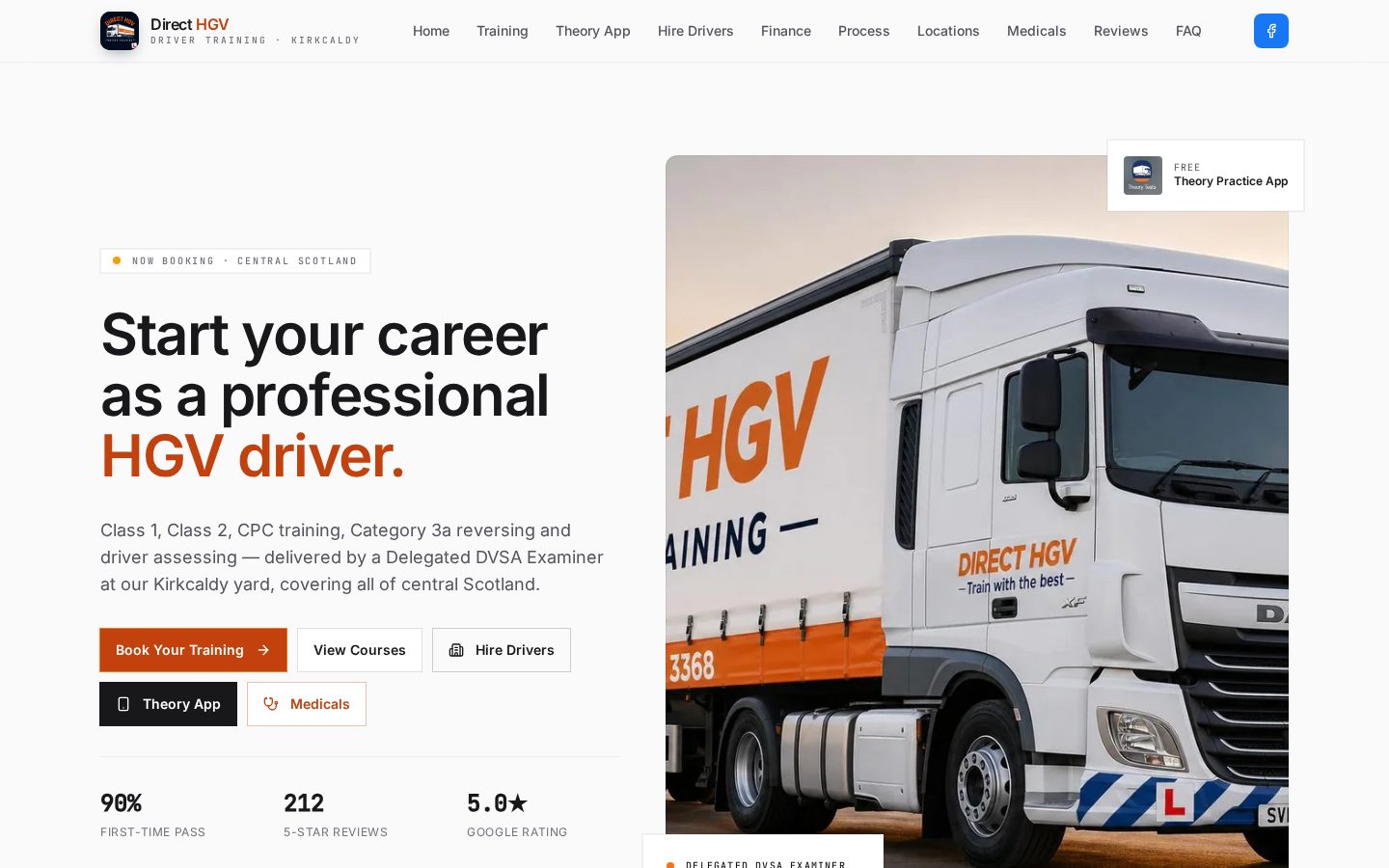
HGV driver training website covering Class 1, Class 2, CPC and reversing courses, with a theory practice app and driver hire enquiries.

Direct HGV Driver Training website homepage showing an HGV training lorry

hgvdrivinglessons.com· Live screenshot

The challenge

People searching for HGV training use very different words — Class 1, Class 2, artic licence, CPC, LGV lessons — and they want to know cost, location and how soon they can start. One vague 'courses' page loses all of that traffic, and the business also needed to attract employers looking to hire drivers.

What we did

  • · Separate pages for each licence category and course type
  • · Clear booking and enquiry routes on every page
  • · Driver hire section aimed at employers, not just learners
  • · Theory practice app promoted from the training pages
  • · Mobile-first layout for people searching on a phone

SEO strategy

  • · Course pages mapped to how learners actually search for licences
  • · Location pages for the areas the training yard genuinely covers
  • · Finance, medicals and process content answering pre-booking questions
  • · Internal linking from guides into the course and booking pages

Where it stands

Live and in ongoing SEO and content development.

← Back to all work
Share

Other projects

Want this kind of work on your website?

Send us your website and we'll identify the biggest opportunities — SEO problems, speed, missed keywords and local ranking potential. No pressure, no jargon.

In more depth

The practical detail

How we map pages to what people actually search for

People don't search in neat categories. One person types 'Class 2 licence cost near me', another searches for 'how to become a rigid lorry driver'. If you only have one generic 'HGV Courses' page, you're trying to make one tool do every job. It doesn't work. For this project, we started by digging into all the different ways real people look for training. We use tools to find these phrases, but a lot of it comes down to common sense and experience – thinking like a customer, not a business owner.

Once we have this list of search terms, we group them by intent. All the searches about 'Class 1' or 'artic' go together. All the 'CPC' queries form another group. Then we build a specific page for each group. The 'Class 1' page talks about Class 1 licences, the jobs you can get, and the artic lorries you'll drive. The 'CPC' page explains what CPC is and why you need it. This tells Google that the site is a proper authority on the topic, and it gives the visitor exactly what they were looking for. It's simple, but it's the foundation of good SEO.

Building a site for different types of visitors

The Direct HGV Training business has two very different customers: the individual learner driver and the logistics company looking to hire qualified drivers. They need completely different information and have different goals. A learner wants to know about prices, how long it takes, and if they can get help with a medical. An employer wants to know about driver availability, experience, and how to make an enquiry quickly.

We treated these as two separate projects under one roof. We built a dedicated 'Driver Hire' section with its own clear navigation and language aimed squarely at fleet managers and logistics firms. It talks their language. The rest of the site is focused on the learner. This separation is crucial. It stops employers having to wade through course details, and it prevents learners from getting confused by corporate hire forms. By giving each audience their own clear path, the website can serve both effectively and generate business from two distinct streams.

Why answering questions builds more trust than a sales pitch

Getting an HGV licence is a big decision. It costs money and involves multiple steps, from medicals to theory tests and practical training. People have a lot of genuine questions before they're ready to hand over their card details. A website that just shouts 'Book Now!' without answering those questions feels pushy and untrustworthy. It creates friction. We find it's always better to be helpful first.

For this website, we created a whole section of content that just answers questions. We wrote straightforward guides on how the medical works, what's involved in the CPC qualification, and what to expect on your first day of training. This content doesn't sell hard. It just helps. By doing this, we show potential customers that the business knows its stuff and understands their worries. It builds trust, and people buy from businesses they trust. These pages also rank on Google for hundreds of related questions, bringing in people who are just starting their research.

What 'Ongoing SEO' actually involves

A website isn't a leaflet you get printed and then forget about. It needs regular maintenance to perform well, just like a vehicle. Our monthly SEO plans, whether at the £199, £399 or £799 level, are about providing that continuous service. For a site like this, ongoing work means keeping an eye on where its pages are ranking on Google for important searches like 'Class 1 training'. If they start to slip, we need to figure out why and fix it.

It also means looking for new opportunities. We might write a blog post about a change in licensing laws, which brings in fresh traffic and shows the business is current. We might notice that people in a specific nearby town are searching a lot, so we'll refine the location page for that area to better match what they're looking for. We also handle the technical side: making sure the site stays fast, secure, and working properly on all devices. It's this consistent, methodical work that keeps a website visible and effective long after the initial build is finished.

Integrating business tools, not just building pages

A good website should make a business easier to run. For our founder, who has ADHD and dyslexia, using modern tools to create efficient systems is second nature. We bring that same thinking to every project. With Direct HGV Training, we didn't just build information pages; we integrated tools that serve a real business purpose. The theory practice app is a perfect example. It's not just a gimmick. It keeps learners coming back to the website, making the brand a part of their daily routine as they prepare for their test.

Likewise, the driver hire enquiry system is more than a simple contact form. It's designed to capture the specific information an employer needs, saving time on back-and-forth emails. This is part of our wider service which includes business systems and app development. We look at the whole business process, from a customer's first Google search to the final booking, and identify where a clever bit of web technology can reduce workload and make the business run smoother. It's about building a business asset, not just a brochure.

Ask A QuestionFree ReviewBook a call