Skip to content
BMRDIGITAL

PR & business visibility

Pentland Press

Online press release and business visibility platform.

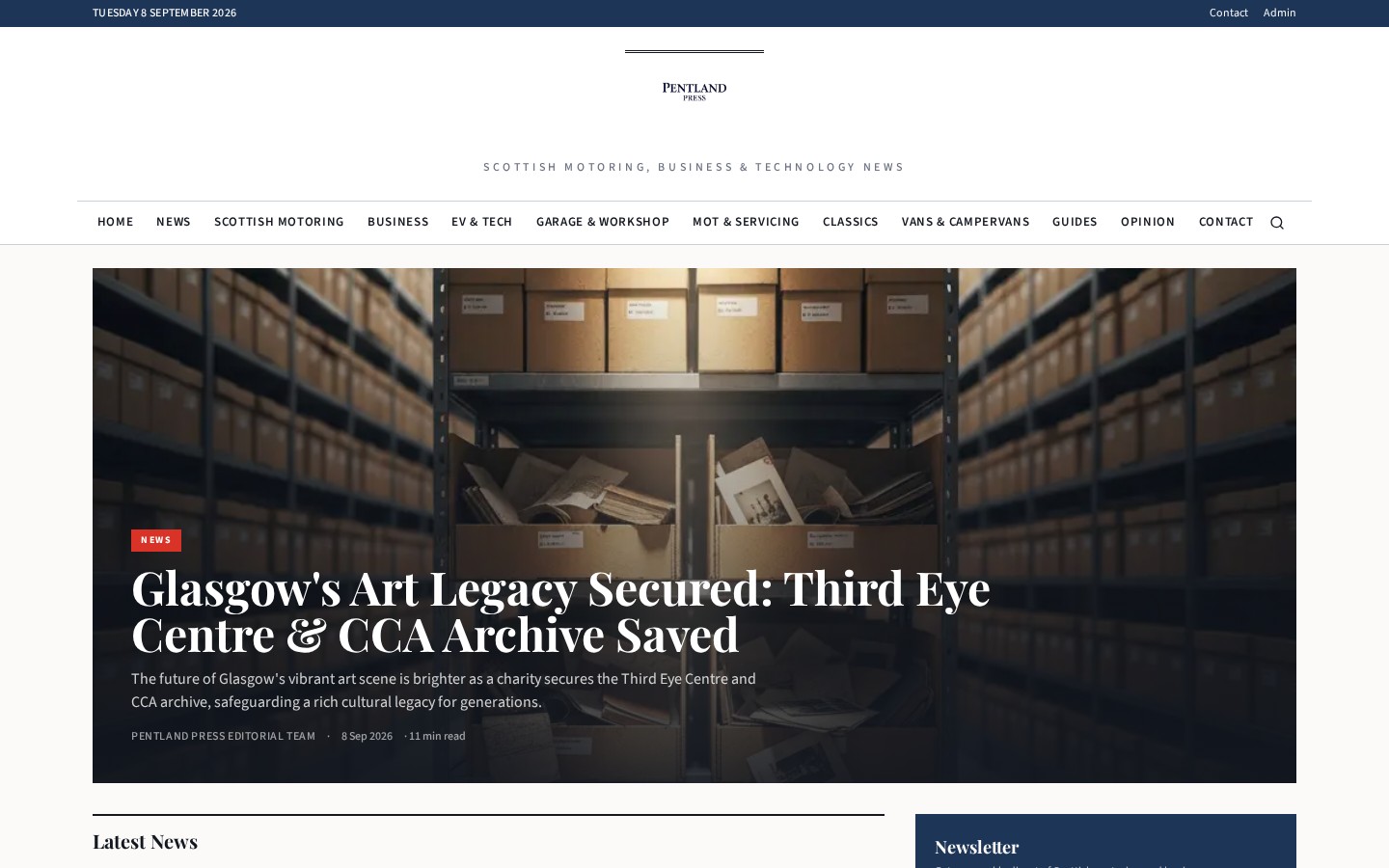
Pentland Press online press release platform website

pentlandpress.co.uk· Live screenshot

The challenge

Making press release distribution understandable and affordable for small businesses that have never used PR before.

What we did

  • · Platform pages for submission and distribution
  • · Editorial content templates
  • · Article schema on published content

SEO strategy

  • · Article structure and authorship markup
  • · Category architecture for published releases
  • · Internal linking between releases and service pages

Where it stands

Ongoing development and content growth.

← Back to all work
Share

Other projects

Want this kind of work on your website?

Send us your website and we'll identify the biggest opportunities — SEO problems, speed, missed keywords and local ranking potential. No pressure, no jargon.

In more depth

The practical detail

How Do Press Releases Help Your SEO?

Most people think of press releases as a way to get a story in the local paper. That’s still part of it, but in today’s world, their main job is often as a powerful SEO tool. We decided to build Pentland Press because we saw that many small businesses were missing out on this. When you publish a press release online, you’re creating a permanent digital asset. It’s a factual, newsworthy piece of content about your company, hosted on a site that search engines recognise as a news source. Over time, as you publish more releases, they start to show up when people search for your brand name. This gives you more control over the first page of Google search results, pushing down any irrelevant or negative information and building a solid, professional online footprint.

The biggest technical win from press releases is the links they generate. When your announcement is syndicated—meaning it’s automatically republished on various news partner sites—each of those publications can create a link back to your website. These aren't just any links; they are 'backlinks' from established domains, which is a strong positive signal to Google. It shows that your business is being talked about across the web. Even the initial link from the Pentland Press platform itself helps to diversify your backlink profile. Think of it like references on a CV. The more credible references you have, the more trustworthy you appear. We built the platform to ensure every release contributes to this long-term goal of building your business's authority online, one announcement at a time.

Designing for People Who Aren't PR Experts

The main barrier for a small business owner wanting to use PR isn't a lack of news. They have plenty to talk about: a new member of staff, winning a contract, supporting a local charity, launching a new service. The problem is that the process feels like a dark art, full of industry jargon and complicated steps. Our entire approach with the Pentland Press platform was to demystify it. We started by putting ourselves in the shoes of someone who's great at their trade—be it a mechanic, a baker, or a consultant—but has never written a press release in their life.

This meant making the submission process brutally simple. We looked at traditional PR submission forms, which can have dozens of confusing fields, and cut them down to the absolute essentials. We translated jargon into plain English. Instead of 'Embargo Date', we ask 'When can this news be published?'. Then we built the editorial content templates. These are the core of the system. They provide a rigid structure that forces the content to be logical and newsworthy. The prompts guide the user: "Start with the city and date," "Write a headline under 70 characters," "Include a quote from a key person." It turns a scary, blank page into a manageable, fill-in-the-blanks exercise. It's a practical system designed for busy people who value efficiency.

What Does 'Article Schema' Actually Do?

On the original case study, we mention using 'Article schema' and 'authorship markup'. It's a bit of technical SEO jargon, but the concept is straightforward. Think of it like adding hidden labels to your web page content that only search engines like Google can read. For every press release published on Pentland Press, our system automatically adds these labels. It explicitly tells Google: "This entire page is a news article," "This specific text is the headline," "This is the name of the organisation it's about," and "This is the exact date and time it was published." It removes all ambiguity.

The reason we do this is all about communication with Google. When a search engine can understand your content perfectly, it trusts it more. This trust can lead to the press release being featured in special sections of the search results, such as the 'Top Stories' news carousel or within the dedicated Google News tab. It's telling the algorithm that your content is timely, factual, and structured correctly as a piece of news. This is a key part of what people now call 'AI-search optimisation'. It's about formatting your information so that artificial intelligence systems can easily digest and classify it. Getting this right means your news has a much better chance of reaching a wider audience, simply because you made it easy for Google to understand.

Why Site Structure and Internal Links Are Crucial

A good website is never just a random collection of pages. It needs a logical structure, like a library where all the books are organised by subject. When we built Pentland Press, we planned this 'category architecture' from the very start. If a construction company announces a new project, the release is filed under the 'Construction' category. If a tech firm hires a new developer, it goes into 'Recruitment' and 'Technology'. This has an immediate benefit for human users, who can easily browse all the news within a specific industry.

For SEO, this structure is even more vital. By grouping related articles together, we create topic-specific hubs. Google's crawlers see this and understand that the website has a depth of knowledge on subjects like 'hospitality' or 'legal services'. This builds topical authority. We then use internal linking to reinforce these connections. A new press release about renewable energy might link back to an older article about a solar farm installation. This simple act does two things: it helps Google discover older, relevant content, and it passes authority between pages. It's a fundamental SEO practice that signals to search engines that your content is part of a wider, interconnected library of knowledge, making the entire site stronger.

Our Philosophy: Continuous Improvement, Not a One-Off Job

For us, launching a website or a platform like Pentland Press is the starting line, not the finish. The project is described as having 'ongoing development', and that's a core part of our philosophy. The internet is not a static environment; search engine algorithms change, user behaviour evolves, and new technologies emerge. A website that is left untouched after launch will inevitably fall behind. We treat our own projects, and our clients' projects, as living assets that require continuous attention.

In practice, this means we are constantly monitoring the performance of Pentland Press. We track how releases rank in Google, which syndication partners are providing the most traffic, and how users are interacting with the submission forms. This flow of real-world data is invaluable. If we notice that press releases with a certain type of headline perform better, we can incorporate that learning into our content templates and guides. When Google updates its requirements for news publishers, we are proactive in updating the platform's technical backend to stay compliant. This iterative process of monitoring, learning, and refining is what separates a basic web presence from a high-performing digital tool. It ensures the platform not only works today but continues to deliver value for its users well into the future.

Ask A QuestionFree ReviewBook a call