Skip to content
BMRDIGITAL

Photo transformation service

Pimp My Photos

UK photo transformation service selling artwork made from customers' own photos.

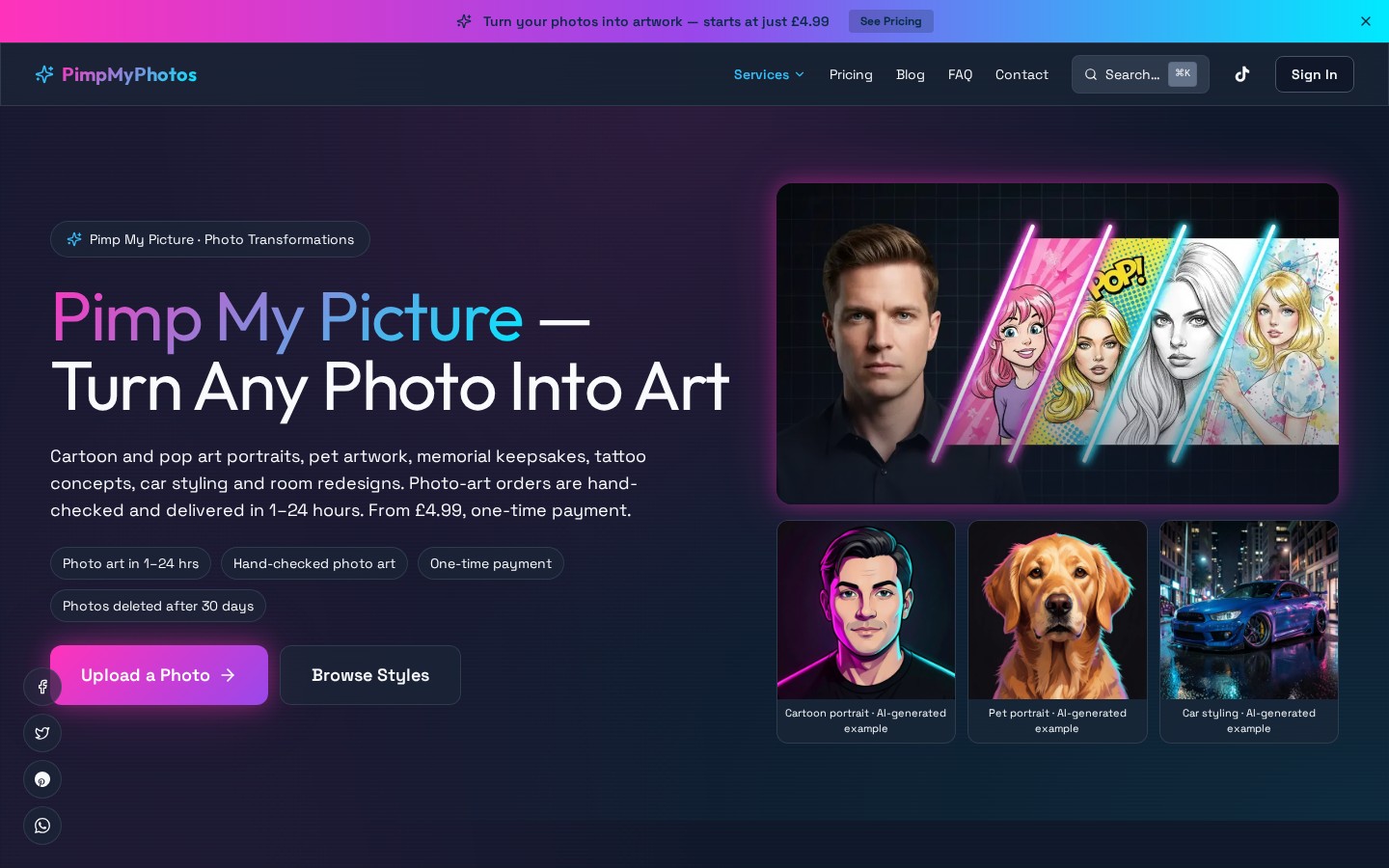
Pimp My Photos photo transformation website homepage

pimpmyphotos.com· Live screenshot

The challenge

Explaining photo-to-artwork styles — cartoon, pop art, watercolour, pencil sketch, anime, pet and memorial portraits — so an ordinary customer understands what they get and can order in a couple of taps.

What we did

  • · A page for each transformation style rather than one vague service page
  • · Upload, pricing and checkout flow with one-time payment
  • · Mobile-first interface and fast image delivery

SEO strategy

  • · Style-led page structure targeting how people actually search (photo to cartoon, photo to watercolour)
  • · Blog and FAQ content answering gift, print and quality questions
  • · Structured data for services, products and FAQs

Where it stands

Live and in ongoing development, with prices from £4.99 and 1–24 hour delivery.

← Back to all work
Share

Other projects

Want this kind of work on your website?

Send us your website and we'll identify the biggest opportunities — SEO problems, speed, missed keywords and local ranking potential. No pressure, no jargon.

In more depth

The practical detail

How we turned a service into a simple product

Selling a custom, creative service is often messy. It usually involves a lot of back-and-forth emails, quotes, and revisions. The first challenge with Pimp My Photos was to get rid of all that. We had to turn an artistic process into a simple, fixed-price product that someone could understand and buy in minutes.

Our process was to break the service down into its smallest parts. What does a customer actually need to decide? First, the style (like cartoon or watercolour). Second, how many people are in the photo. That's it. Everything else should be handled by the system. By defining these simple choices, we could create a clear path: pick a style, see the price, upload the photo, and pay.

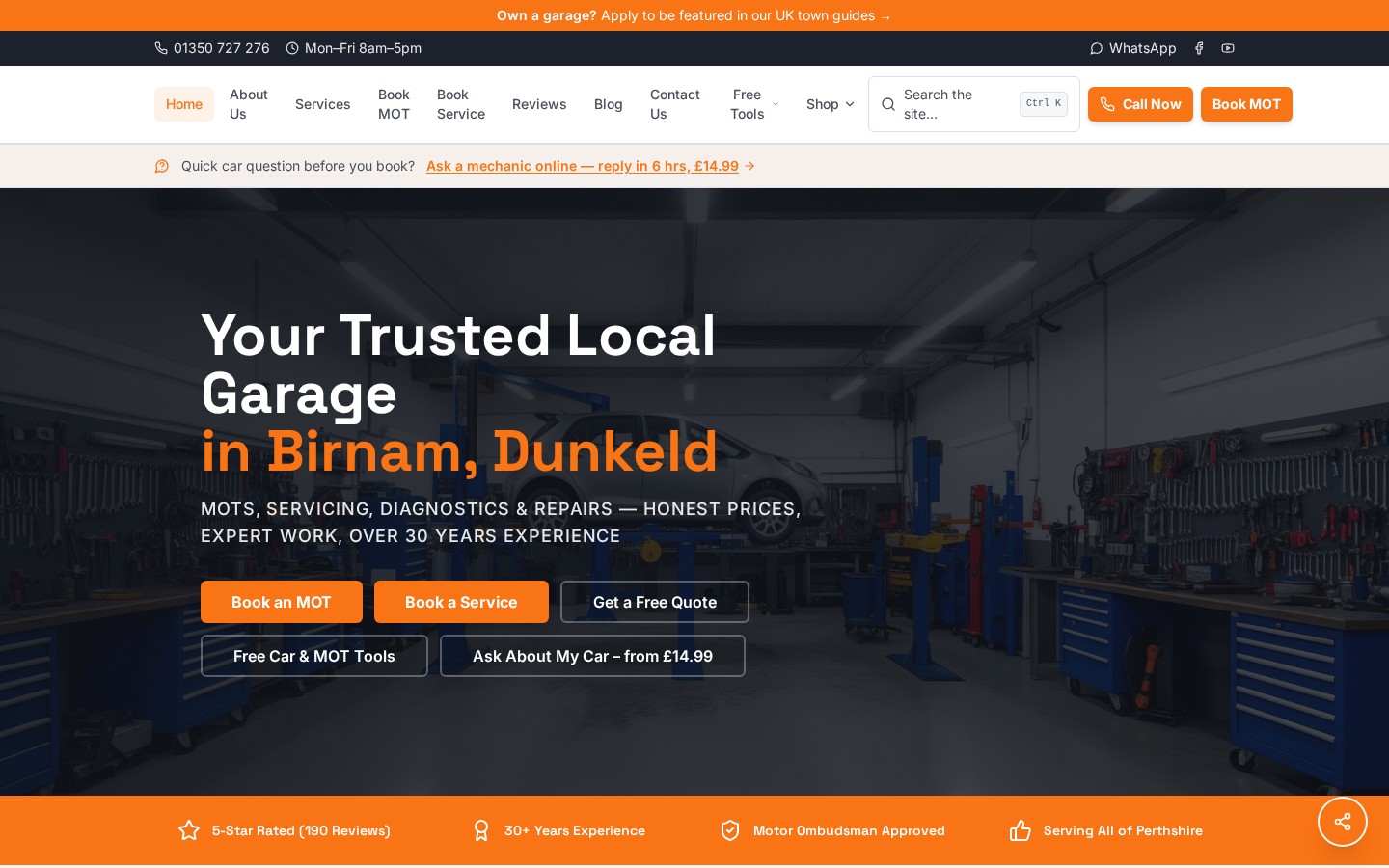
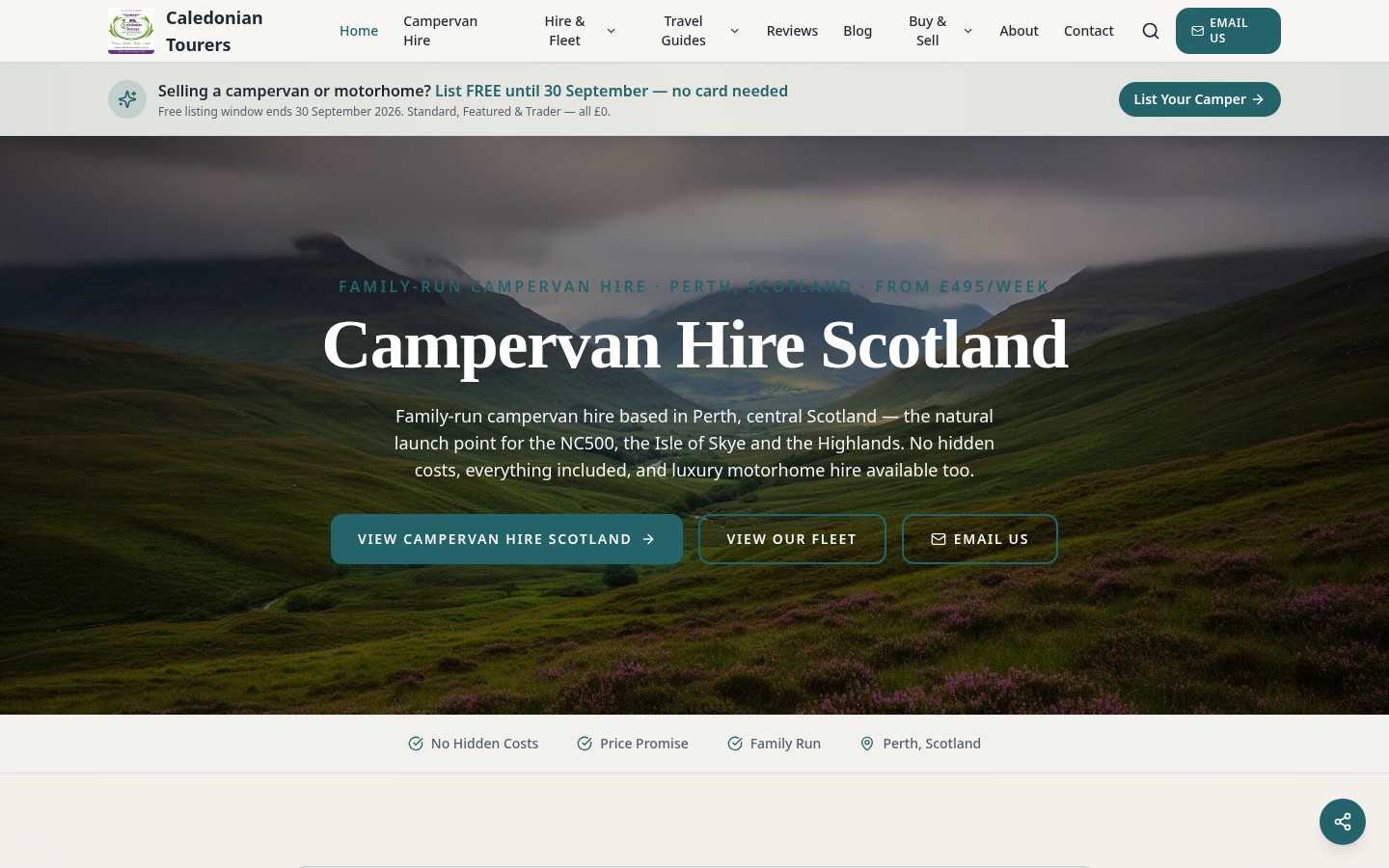
This isn't just about websites; it's about business systems. We apply the same logic whether we're designing a booking flow for a campervan hire company or a service menu for a local garage. The goal is always to remove the questions and friction that stop a potential customer from committing. A clear, simple process sells better than a complicated one, every time.

Why site speed is everything on an image-heavy website

A website like Pimp My Photos lives and dies by its images. The entire point is to show off the brilliant artwork. But high-quality images are large, and large files make a website slow. And a slow website is one of the fastest ways to lose a sale. People just don't have the patience to wait for pictures to load, especially on a mobile phone.

We knew from the start that speed would be a priority. It's not enough for the site to look good; it has to feel fast. This meant putting a lot of work into the technical side. We set up systems to automatically compress and resize every image without losing visual quality. We made sure the code was clean and efficient, and that the server it sits on could deliver the files quickly.

The bottom line is that performance is a feature. For an e-commerce site, it's one of the most important ones. A two-second delay in page load time can be the difference between a customer completing checkout or closing the tab in frustration. Our job is to make sure the technical details support the business goal, which in this case was making it quick and easy to buy.

Thinking like a customer for a better SEO strategy

When it comes to Search Engine Optimisation (SEO), it's easy to get lost in technical jargon. Our approach is to start with the customer. What words are they actually typing into Google? For this project, we knew nobody was searching for 'bespoke photo transformation services'. They were searching for 'turn my photo into a cartoon' or 'photo to watercolour gift'.

This is why we built a separate page for each art style. A single, generic 'services' page is weak from an SEO perspective. It tries to be about everything, so it ends up being about nothing in particular. By creating a dedicated page for 'Photo to Pencil Sketch', we gave Google a perfectly relevant result to show to someone searching for exactly that. The page's URL, headings, and text are all focused on that one topic.

This structure also makes for a better user experience. If someone lands on the pencil sketch page from Google, they see examples of pencil sketches and a button to order one. They don't have to navigate through a complicated site to find what they're looking for. Good SEO isn't about tricking search engines; it's about organising your website in a logical way that helps both customers and Google understand what you do.

What is structured data and why did we use it?

Structured data is extra code we add to a webpage to explain what the content is. Think of it like labelling your content for Google. Instead of just showing Google a block of text, you can tell it: 'This number is a price', 'This text is a product description', or 'This is a frequently asked question and here is its answer'. It's a core part of modern technical SEO and AI-search optimisation.

For Pimp My Photos, we used it in a few key ways. For each art style, we used 'Product' structured data. This allows Google to pull information like the price (£4.99 and up) and availability directly into the search results. This makes the listing stand out and gives the searcher useful information before they even click.

We also used it on the FAQ page. By marking up the questions and answers, we make it possible for Google to show them as 'rich results' in search. Someone searching 'how long does a photo portrait take?' might see the answer '1–24 hour delivery' right there on the Google results page. This builds trust, answers a query instantly, and makes it more likely that the user will click through to the site for their purchase.

A mechanic's logic for solving website problems

Our founder, Robert, trained and worked as a motor mechanic in Fife before moving into web development full-time. That background still shapes how we approach every project. A mechanic uses a diagnostic process to find and fix a fault. If an engine doesn't start, you don't just guess; you check the fuel, the air, and the spark in a logical order. We do the same for a website.

If a site isn't getting sales, is it a technical problem (the engine won't start), a traffic problem (the car has no fuel), or a conversion problem (the driver doesn't know how to operate the controls)? With Pimp My Photos, we applied this methodical approach to build a reliable system from the ground up, ensuring the checkout worked, the pages were fast, and the user journey was clear.

Robert's experiences with dyslexia and ADHD also mean we have a low tolerance for complexity. We build websites that are clear, simple, and easy to navigate because we know firsthand how frustrating a confusing interface can be. The clean, one-page checkout and straightforward style pages on Pimp My Photos are a direct result of this thinking. Our goal is to build a reliable tool that does the job well, not an over-complicated machine that's difficult to use.

Ask A QuestionFree ReviewBook a call