
Skip to content
BMRDIGITAL

Audio reviews & content

SpeakersMag

Audio equipment review and buying-guide site covering speakers, soundbars, subwoofers, TVs and headsets.

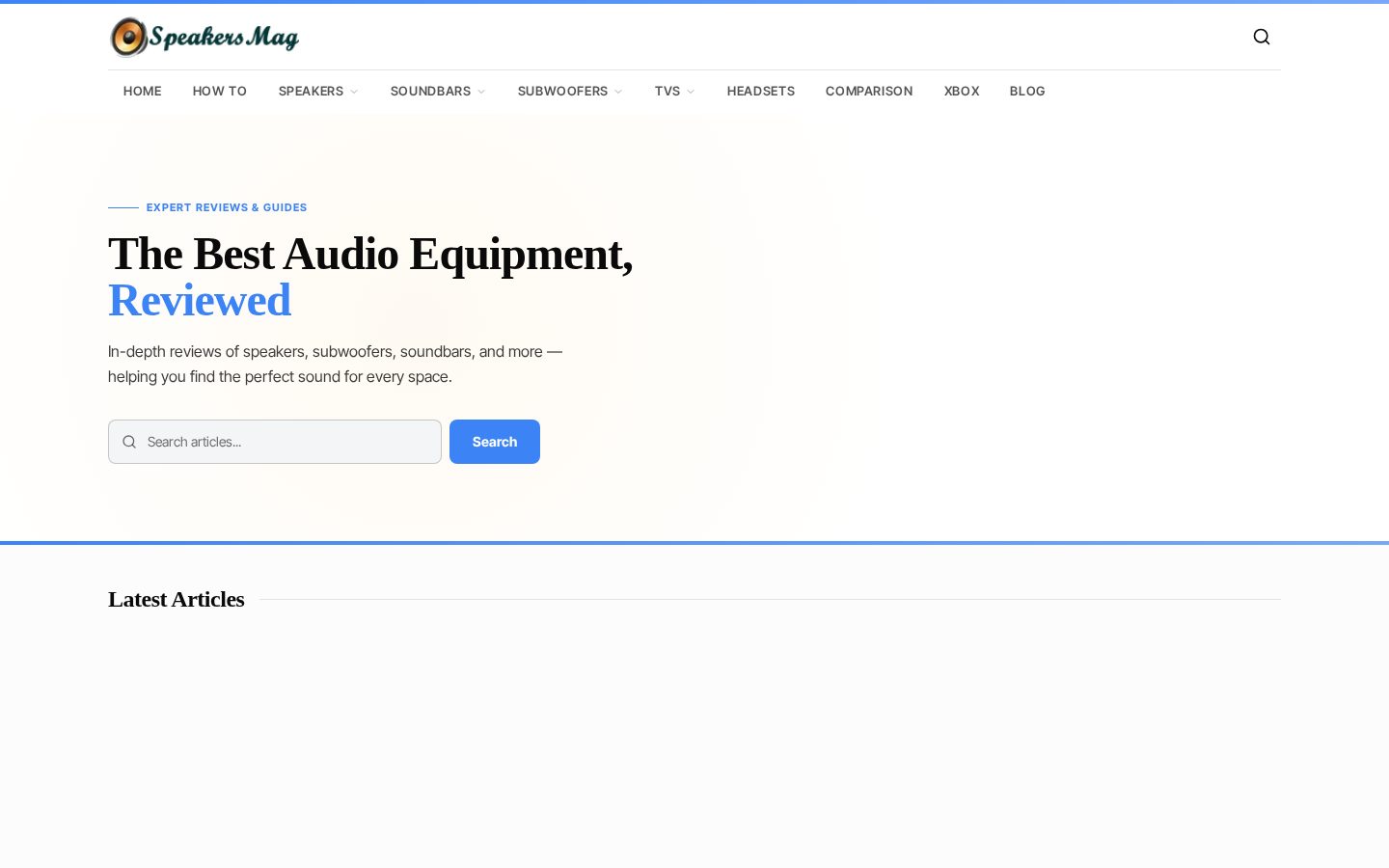
SpeakersMag audio equipment review website homepage

speakersmag.co.uk· Live screenshot

The challenge

Review content is one of the most competitive spaces online. Winning means proper category architecture, genuinely useful comparisons and pages that load fast — not thin affiliate posts.

What we did

  • · Category architecture across speakers, soundbars, subwoofers and more
  • · Consistent review and comparison templates
  • · Search and browse for readers looking for a specific product
  • · Fast, lightweight article pages

SEO strategy

  • · Keyword mapping by product category and buying question
  • · Comparison and 'best of' content structured for featured snippets
  • · Internal linking between reviews, comparisons and guides
  • · Technical SEO to keep a growing content library crawlable

Where it stands

Ongoing content and SEO programme.

← Back to all work
Share

Other projects

Want this kind of work on your website?

Send us your website and we'll identify the biggest opportunities — SEO problems, speed, missed keywords and local ranking potential. No pressure, no jargon.

In more depth

The practical detail

How do you build trust on a review site?

In a space crowded with paper-thin reviews, the main job is to build trust. Search engines like Google are getting very good at spotting sites that are genuinely helpful versus those just trying to make a quick commission. They want to see real-world expertise and authority. If a site looks like it was thrown together just to funnel traffic to Amazon, it won't last long.

For SpeakersMag, building this trust meant creating a solid, repeatable system. The consistent templates mentioned in our summary aren't just for looks; they are a quality control mechanism. They ensure every review covers the key points a real buyer cares about – connectivity, sound quality for different uses, build quality, and value for money. This methodical approach shows both readers and search engines that we have a proper evaluation process. It's not just opinion; it's a structured breakdown that helps people make a better choice.

Keeping a big website tidy for search engines

The original summary mentions making the site 'crawlable', but what does that actually mean? Think of your website as a massive warehouse and Google as the stock-taker who only has a limited amount of time to visit. If your warehouse is a mess, with items in the wrong place and no clear aisles, the stock-taker will miss things or just give up. This is what 'crawl budget' is all about.

For SpeakersMag, a site with a growing library of hundreds of reviews and guides, keeping it tidy is a constant job. Our work involved creating a logical URL structure (e.g., /soundbars/best-for-movies/) so that the address itself explains what the page is about. We then built a strong internal linking network, like clear signposts in the warehouse. A guide to 'best soundbars' links down to individual reviews, and those reviews link back up or across to relevant comparisons. This helps Google understand the relationships between pages and discover new content efficiently, ensuring the whole library gets indexed, not just the pages near the entrance.

What's our process for content that actually helps?

Keyword mapping is a good starting point, but a successful content strategy goes deeper. We don't just look at what people are typing into Google; we think about why they're typing it. Someone searching for 'best TV for gaming' has a different need from someone searching for 'what is HDMI 2.1?'. The first person is ready to buy (commercial intent), while the second is gathering information (informational intent). A good website needs to serve both.

Our process for SpeakersMag was to map out these user journeys. We planned content in clusters around a central topic, like 'Subwoofers'. This cluster includes the main buying guide ('Best Subwoofers'), specific comparisons ('SVS vs Klipsch'), individual product reviews, and helpful guides ('How to place a subwoofer in your room').

By linking these articles together, we create a web of expertise. A reader can land on one page and easily find answers to their next five questions without leaving the site. This is great for the user, which in turn sends strong signals to Google that SpeakersMag is a comprehensive resource and an authority on the subject.

Doing affiliate SEO the right way

The term 'affiliate website' often brings to mind low-quality, spammy pages. Our goal with SpeakersMag was to build a genuine brand that happens to be funded by affiliate commissions, not the other way around. The fundamental rule is that the content must be valuable in its own right, even if the affiliate links were removed. The links should be a helpful service for a reader who has already made a decision based on your excellent advice.

This means going further than just listing product specs you can find anywhere. It's about providing unique insight. For a review site, this means analysing customer feedback from dozens of sources, offering unique comparisons, and structuring the information in a way that makes it easier to digest than anywhere else. It's about doing the hard work so the reader doesn't have to.

Being upfront is also a huge part of it. We make sure affiliate disclosures are clear and easy to find. Trying to hide the fact that you might earn a commission is a red flag for users and for Google. Honesty builds trust, and trust is the foundation of a site that can rank and earn for years, which is a core part of our ethical approach to SEO.

How we're preparing for the future with AI search

Search is changing again. With the rise of AI-powered answers directly in search results (like Google's SGE), the game is no longer just about ranking number one. It's about becoming the source that the AI model trusts and quotes. We're already applying our AI-search optimisation methods to sites like SpeakersMag to get them ready for this shift.

The key is highly structured, clear content. AI models need information that is easy to parse and understand. The review templates we built for SpeakersMag, with their distinct sections for pros, cons, key specifications, and verdict, are ideal for this. The content is broken down into logical chunks that directly answer a user's potential questions.

Behind the scenes, we use technical tools like Schema markup. This is extra code that acts like a set of labels for search engines, explicitly telling them 'this is a product review', 'this is the product's star rating', and 'this is the author'. By spoon-feeding this information to Google in a language it understands perfectly, we increase the chances that SpeakersMag will be featured as a trusted source in future AI-generated answers, protecting its traffic for the long term.

Ask A QuestionFree ReviewBook a call